
Design System — Unifying Workflows Across Teams
Building a unified, scalable design system for a multi-agency government department, improving quality, accelerating delivery, and reducing costs.
Background
Child Safety operated multiple digital tools, each built by different vendors, using different UI styles and UX patterns.
This created:
❗️Inconsistent experiences
❗️ High maintenance costs
❗️ Slow delivery
❗️ Repeated work across teams
________
Teams were moving fast, but not together.
________Goal
Create one design system that aligns all products and enables fast, consistent, scalable work.
My Role
I co-led the architecture and creation of the design system:
mapping the current experience, defining foundations, building components, and creating documentation with service design, PM, and engineering.
mapping the current experience, defining foundations, building components, and creating documentation with service design, PM, and engineering.
Mapping the Problem
I audited existing products, compared UI patterns, and documented UX gaps.
This gave us a clear picture of the inconsistencies and what must be standardized.
This gave us a clear picture of the inconsistencies and what must be standardized.
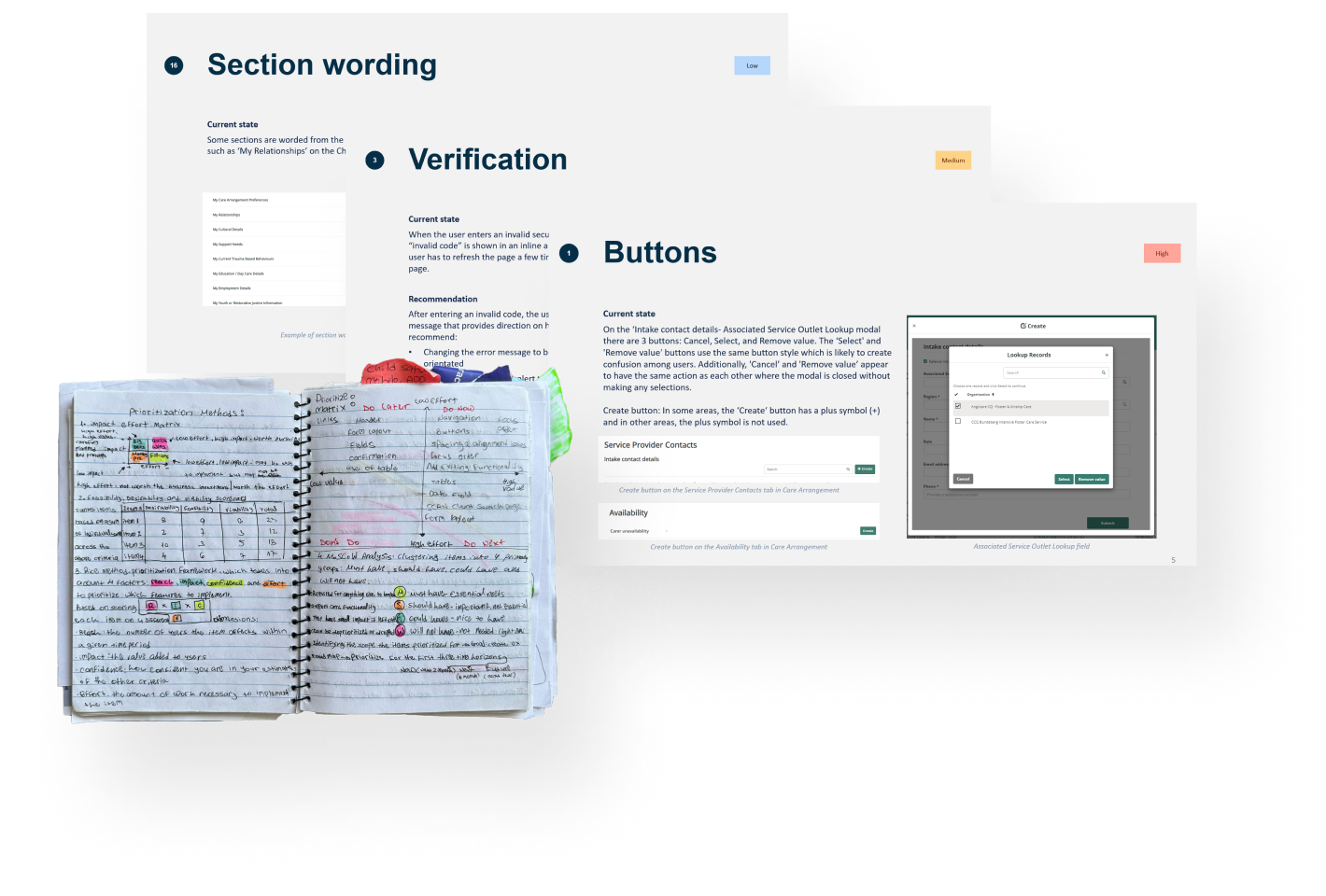
A few slides from a gap analysis presentation we presented to the client based on the 'Impact efforts matrix'
________
Frictions showed up in every handoff, designers repeated work, and engineers re-implemented patterns.
________System Architecture
We defined a structure that supports accessibility, modularity, and long-term scaling:
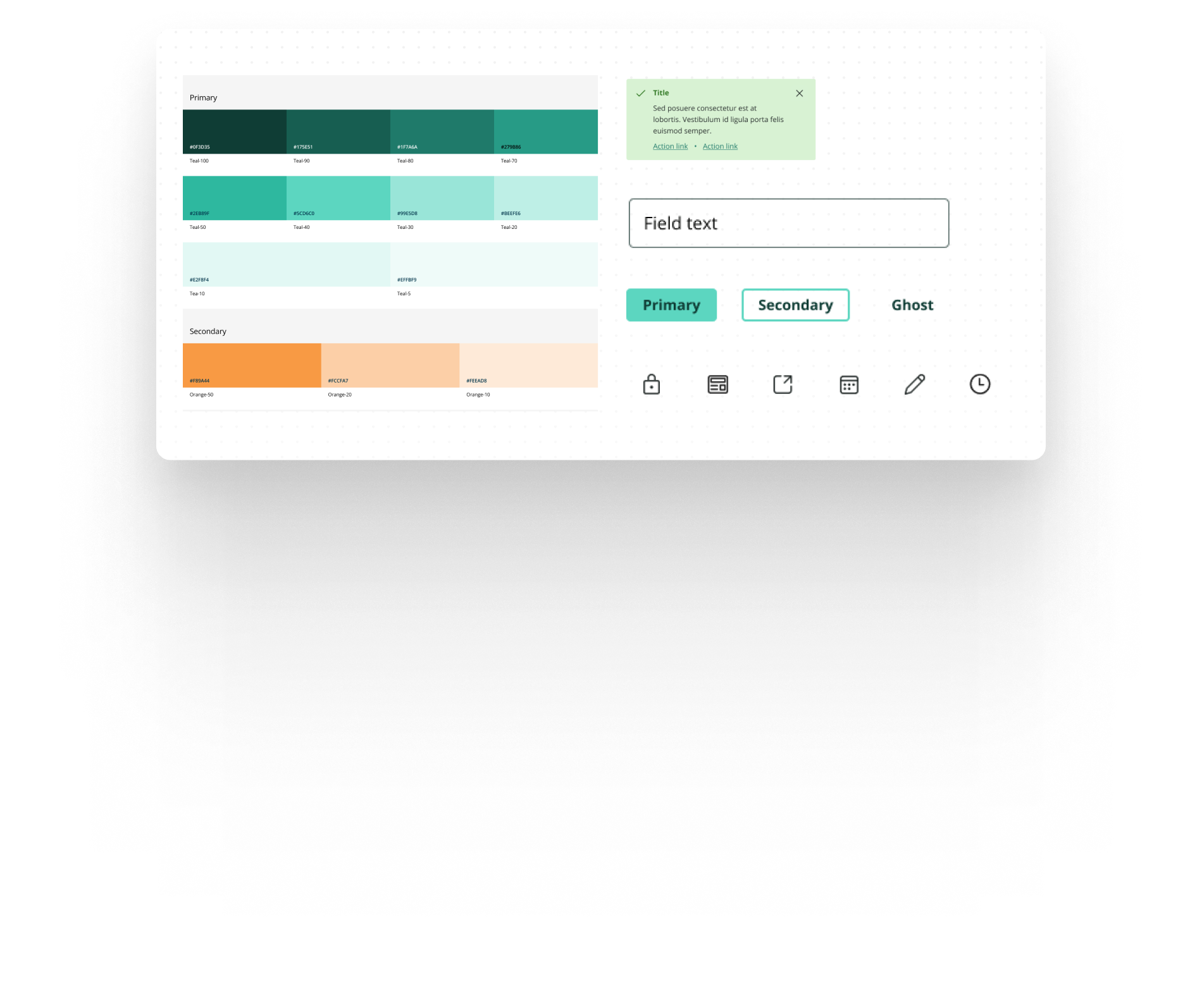
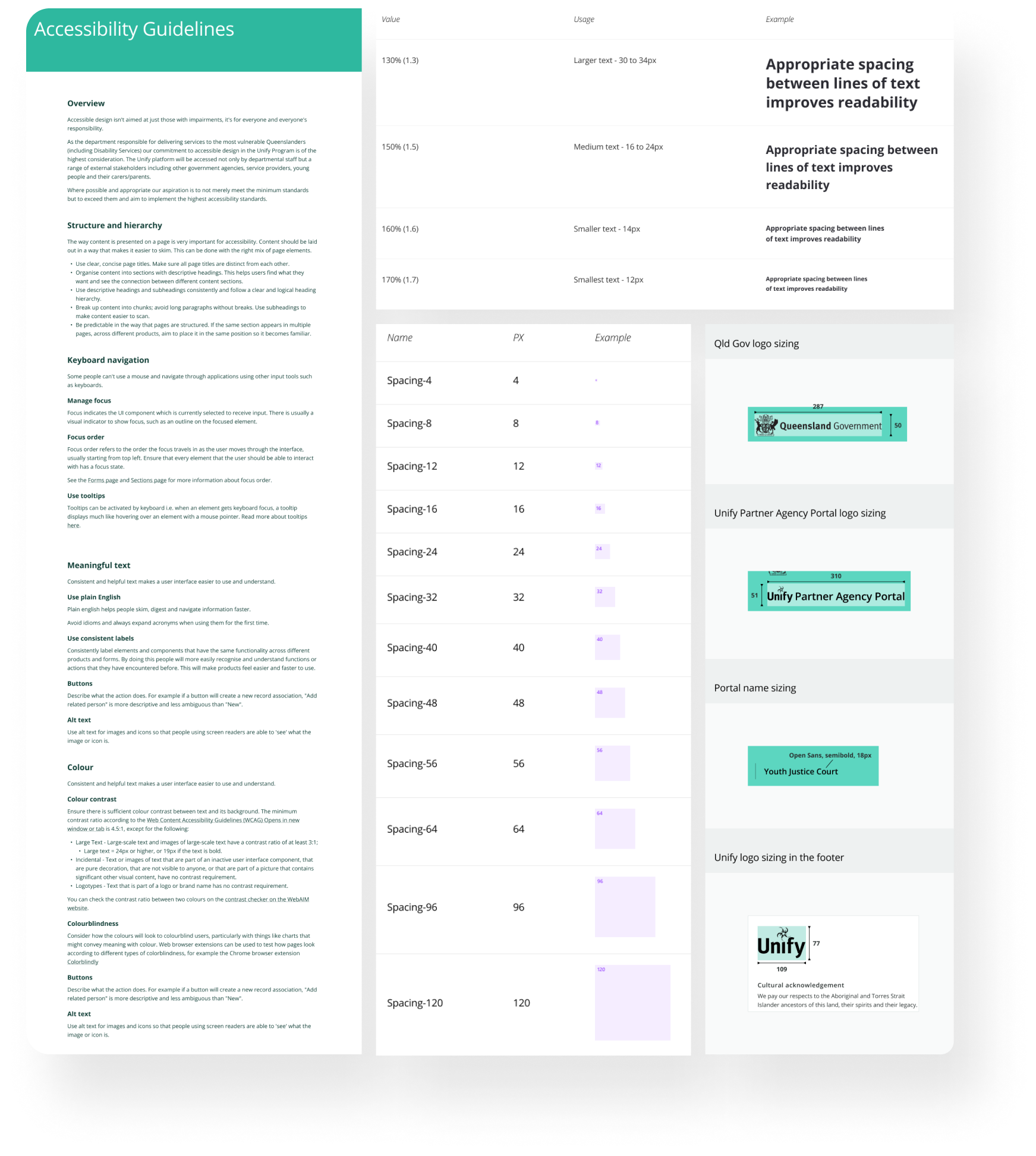
Foundations
Color, spacing, typography, grids, sizing, and content rules.
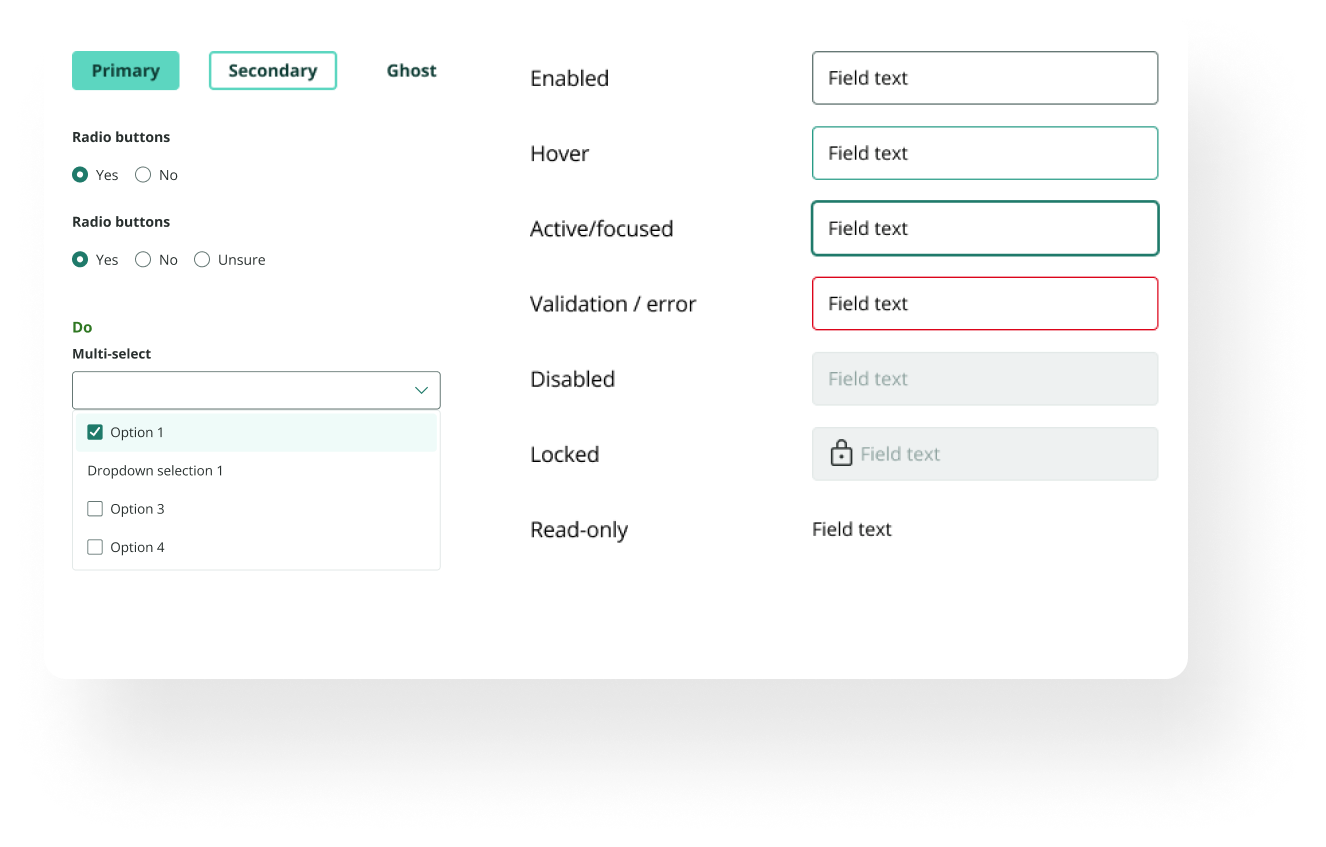
Base Components
Buttons, inputs, tables, navigation, dropdowns, tags, etc.
Each component included behavior, interaction rules, and accessible states.
Each component included behavior, interaction rules, and accessible states.
Patterns
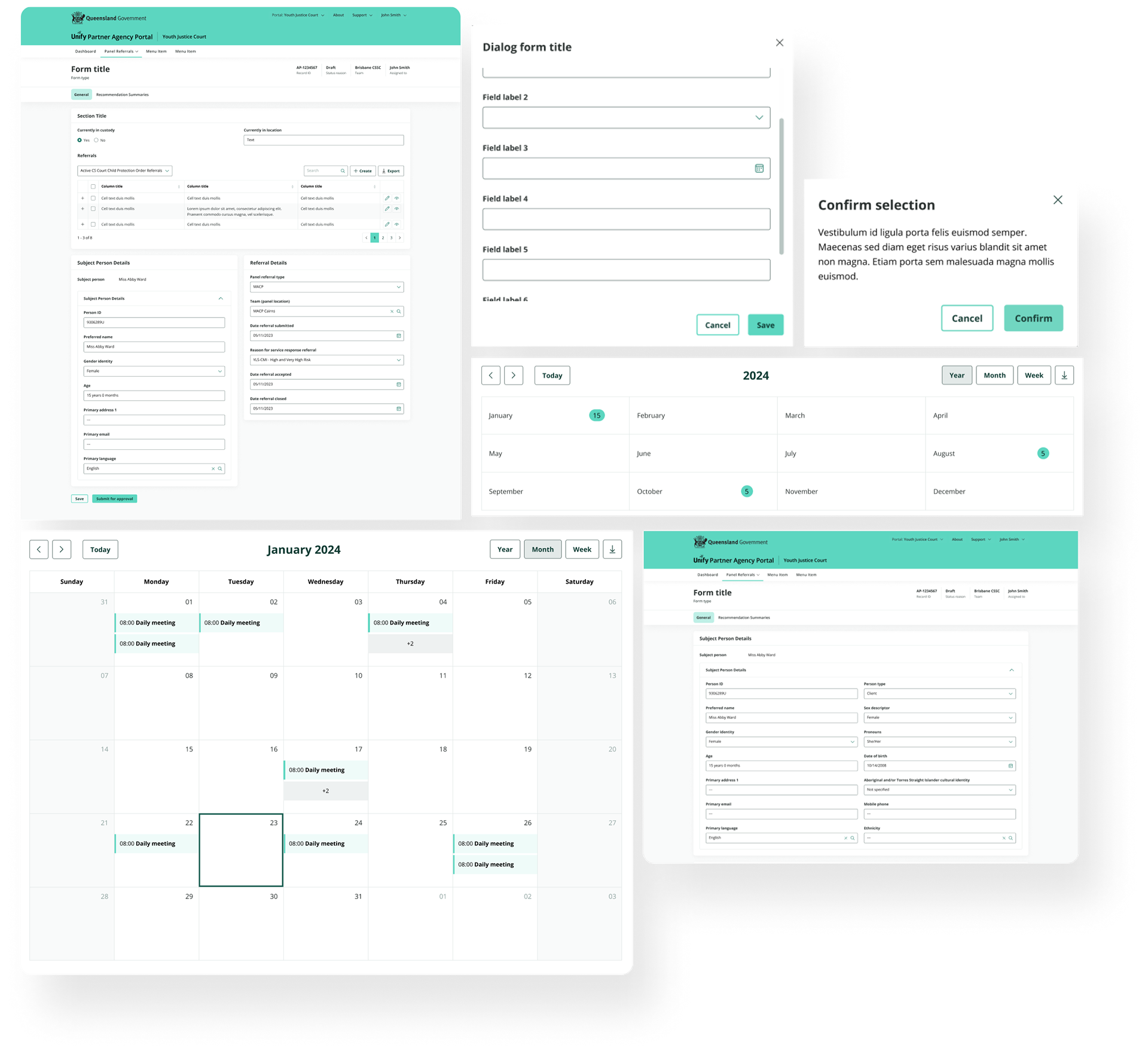
Reusable UX flows: forms, dialogs, calendars, error states, validation rules.
Visual Language
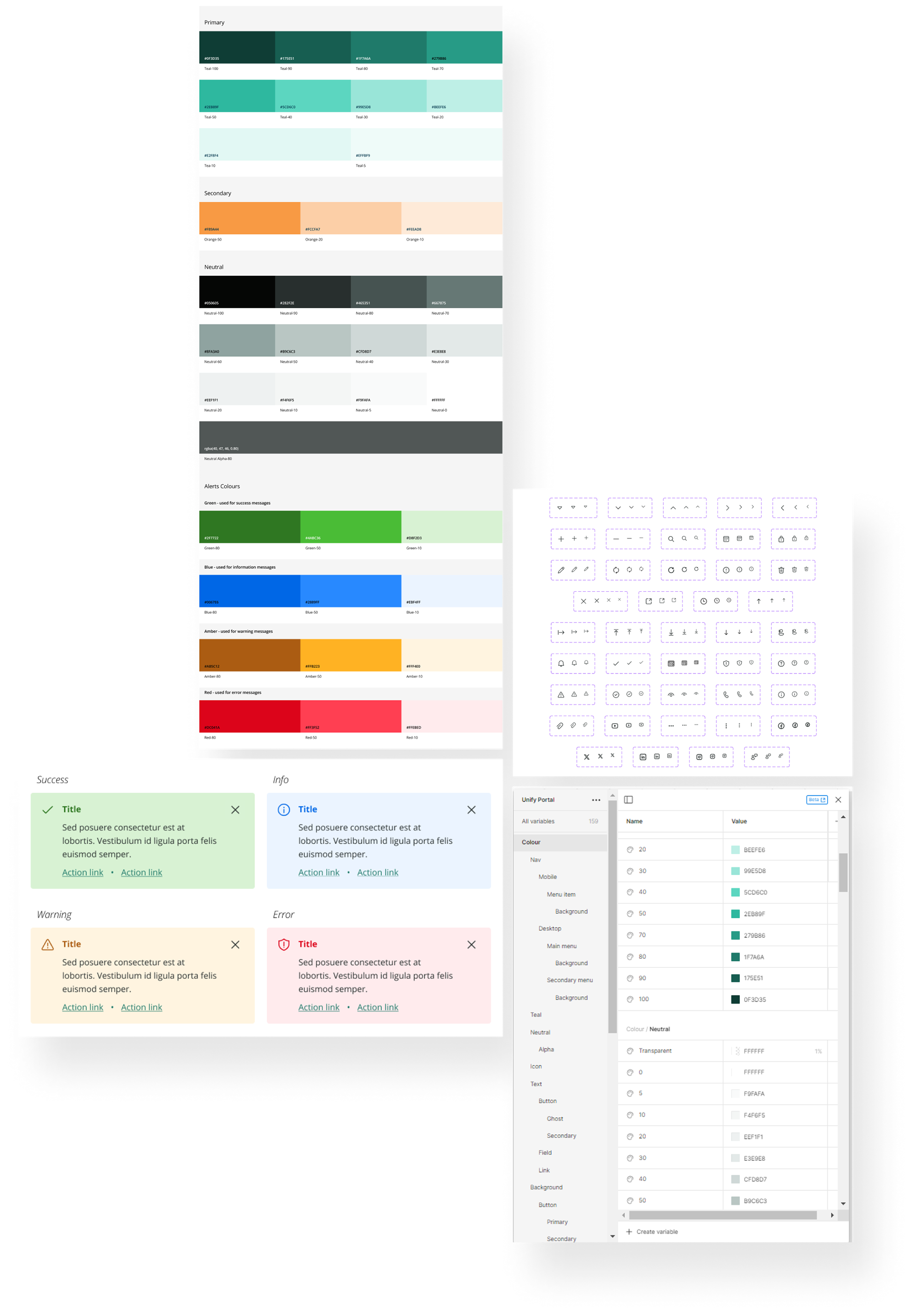
A unified color palette and multiple themes to support different agencies and use cases.
________
Consistency is not decoration, it’s the backbone of clarity
in complex systems
________Documentation
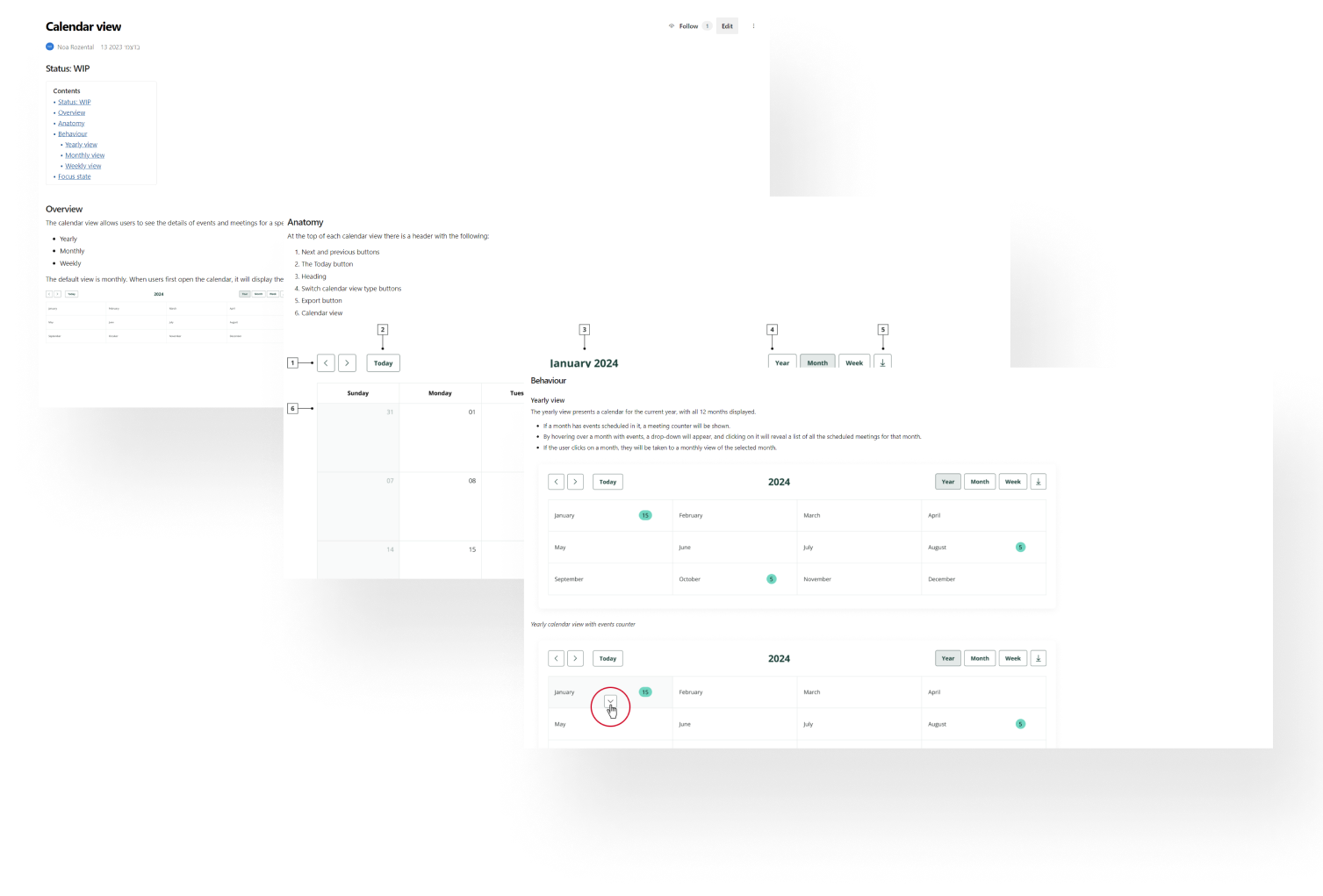
We delivered comprehensive, actionable guidelines for designers and developers:
usage rules, component behavior, variations, do’s/don’ts, and accessibility notes.
usage rules, component behavior, variations, do’s/don’ts, and accessibility notes.
________
The goal wasn’t to design more components, it was to design fewer, smarter ones.
________Testing & Iteration
We applied the design system in real products, gathered feedback from PMs, designers, and developers, and refined the system based on accessibility, usability, and engineering constraints.
Outcome
✨ Consistent UI across all Child Safety products
✨ Faster delivery through reusable components
✨ Improved accessibility and reduced UX errors
✨ Scalable framework adopted by multi-agency teams
✨ Reduced development time & costs through standardization
✨ Faster delivery through reusable components
✨ Improved accessibility and reduced UX errors
✨ Scalable framework adopted by multi-agency teams
✨ Reduced development time & costs through standardization
________
The new system unified 4 different product surfaces into one coherent visual language.
________Reflection
This project strengthened my system thinking and my ability to design scalable structures for complex organizations, a foundation I bring into every product I touch.